
There are moments in life when a person knows something clearly in their mind, yet feels something entirely different in their heart. In those moments, it is rarely logic that takes the lead. Instead, it is feeling—quiet, persistent, and deeply rooted—that begins to guide decisions.
Hope is one of the strongest of these feelings. It does not shout or demand attention, but it carries a steady presence that can soften even the most rational thinking.
In environments like gambling, where uncertainty is constant and outcomes are never guaranteed, this quiet strength of hope becomes even more powerful. A person may sit with a full understanding of the risks.
They may know the odds, recognize patterns, and even understand when it might be wise to stop. And yet, something inside continues to whisper that the next moment could be different. That whisper is not built on evidence, but it feels real—like a small light in the distance that refuses to go out.
And so, even when logic gently suggests stepping back, hope encourages one more step forward.
Studies in behavioral psychology suggest that people are significantly more likely to continue risk-based decisions when they believe a positive outcome is still possible, even if the probability is extremely low. This is not irrational in the traditional sense—it is emotional persistence. It is the mind holding onto possibility, even when reason begins to loosen its grip.
The Quiet Voice That Refuses to Fade

Hope has a unique quality—it does not require proof to exist. It is not built on data or outcomes, but on the simple human need to believe that something better may still be ahead. Because of this, it can remain steady even through repeated losses or clear signs that things are not going as planned.
In gambling, this becomes especially visible. Each new round feels like a fresh start. Each bet feels like a clean page. The past can be quietly set aside, and the future appears open again. A person may tell themselves that the next move will be different, that luck will shift, or that something is about to change.
One player shared this feeling online:
“I knew I’d been losing all night, but it still felt like the next one could turn everything around.”
This is the voice of hope. It does not argue with logic—it simply speaks alongside it, gently repeating the possibility of change.
There is also comfort in this voice. Hope softens the weight of uncertainty. It allows a person to sit in an unpredictable situation without feeling completely lost. Without it, the experience might feel final or heavy. With it, the future remains open.
And that openness can be hard to let go of.
When Logic Begins to Grow Quiet
Hope does not erase logic—but it can quiet it.
A person may still understand the situation clearly. They may know the probabilities, recognize the patterns, and even acknowledge that continuing may not be the best choice. But that understanding no longer carries the same emotional weight.
Instead, decisions begin to shift slowly.
The thought becomes: just one more try.
Not as a reckless impulse, but as a reasonable extension of hope. One more chance does not feel excessive. One more step does not feel risky. And because each step feels small, it becomes easy to repeat.
Research shows that over 65% of individuals in high-risk decision environments continue beyond their planned stopping point, often driven by emotional reasoning rather than logical thresholds. This highlights how powerful the shift can be when feeling begins to outweigh thought.
A common reflection from players captures this well:
“I knew I should stop, but it didn’t feel like the right moment to walk away.”
That gap—between knowing and feeling—is where logic grows quiet.
The Emotional Weight of Wanting More
At the center of this experience lies something deeply human: the desire for something more.
Not just more money, but more resolution, more satisfaction, more meaning. Hope feeds this desire gently, encouraging the belief that change is still possible. And in gambling, every decision carries the promise of that change.
The next bet is not just a move—it is an opportunity. A chance to shift the outcome. A chance to turn things around.
This creates emotional weight.
Each decision begins to matter more. Each outcome feels more significant. And with that significance comes attachment—not just to winning, but to the idea of what could happen.
A player once described it this way:
“It wasn’t about what I had already lost. It was about what I felt I could still gain.”
This forward-focused thinking is a key part of hope’s influence. It pulls attention away from reality and places it on possibility.
And possibility, even when unlikely, can feel incredibly powerful.
Why the Brain Chooses Hope Over Logic
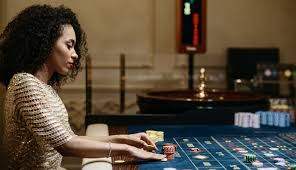
From a neurological perspective, this shift is not surprising.
The human brain is wired to prioritize potential rewards. When there is even a small chance of a positive outcome, the brain releases dopamine, reinforcing the desire to continue. This means that hope is not just emotional—it is chemical.
Interestingly, studies show that uncertain rewards trigger stronger brain responses than guaranteed ones. This explains why the possibility of winning—even when unlikely—can feel more compelling than the certainty of stopping.
In simple terms:
- Logic focuses on what is
- Hope focuses on what could be
And the brain often prefers “what could be.”
This is not a flaw. It is part of how humans are built—to seek, to believe, and to move toward possibility.
Bringing Hope and Logic Back Into Balance
Hope is not something that needs to be removed. In many ways, it is essential. It provides motivation, resilience, and the ability to move forward even when outcomes are uncertain.
But when hope stands alone, without logic beside it, decisions can drift.
Balance begins with awareness.
When a person notices that they are acting more on feeling than on understanding, a small space opens. In that space, both voices—hope and logic—can be heard again.
Even a brief pause can be enough:
- To recognize the emotional pull
- To remember the actual situation
- To decide with both feeling and thought present
Research suggests that short moments of reflection can significantly reduce emotionally driven decisions, especially in environments designed to encourage continuous action.
This does not mean choosing logic over hope. It means allowing both to exist together.
Hope can inspire.
Logic can guide.
And together, they create a steadier path forward.
A Soft Closing Thought
Hope is one of the most gentle and powerful forces within us. It allows us to see light in uncertain places, to believe in change, and to keep moving forward even when outcomes are unclear.
When hope feels stronger than logic, it does not mean something is wrong. It simply means something deeply human is happening.
But within that humanity, there is also a quiet invitation—to stay aware. To listen not only to what we wish for, but also to what we know.
Because in the balance between hope and logic, there is something rare and valuable:
A way to move through uncertainty with both warmth and clarity.
And in that balance, decisions are no longer pulled in one direction or the other—they are guided gently, with understanding, toward something more steady and real.